What Exactly Is Lean Six Sigma (in Simple Terms)?
Lean Six Sigma is a powerful, structured approach to solving problems, improving processes, and eliminating waste.
Lean focuses on speed, flow, and removing non‑value‑adding activities.
Six Sigma focuses on reducing errors, defects, and variability.
Together, they help organisations deliver better, faster, cheaper, and more reliable products and services.
Think of Lean Six Sigma as the “Google Maps” of business improvement, it gives you a clear, data‑driven route to move from where you are to where you want to be, with fewer detours and costly mistakes.
Why Lean Six Sigma Matters More Than Ever in 2026
1. AI and Automation Are Reshaping Work, and Lean Six Sigma Makes You Indispensable
AI can automate tasks, but it can’t:
Lean Six Sigma professionals bridge the gap between technology and human‑centred problem‑solving.
2. Global Competition Is Fiercer Than Ever
Companies are under pressure to:
Reduce operational costs
Improve quality
Deliver faster
Innovate continuously
Lean Six Sigma provides the frameworks to achieve all four.
3. Economic Pressures Demand Efficiency
In 2026, organisations are prioritising:
Cost reduction
Waste elimination
Productivity improvement
Customer retention
Lean Six Sigma is the most proven methodology for doing this sustainably.
4. Digital Transformation Requires Process Excellence
Digital tools fail when underlying processes are broken. Lean Six Sigma ensures organisations fix the process before automating it.
Why Lean Six Sigma Is Becoming Essential Across Industries
Lean Six Sigma is no longer limited to manufacturing. In 2026, it’s a cross‑industry powerhouse.
Manufacturing
Healthcare
IT & Software
Finance & Banking
Supply Chain & Logistics
Improve forecasting
Reduce lead times
Optimise inventory
Public Sector
Improve service delivery
Reduce bureaucracy
Increase transparency
Energy & Utilities
Improve reliability
Reduce downtime
Optimise resource usage
Lean Six Sigma is universal because every organisation has processes, and every process can be improved.
Benefits for Professionals: Why YOU Need Lean Six Sigma in 2026
1. Career Growth and Promotion Advantage
Lean Six Sigma professionals are seen as:
Problem‑solvers
Change leaders
Strategic thinkers
These are the people organisations promote.
2. Salary Advantage
Global salary surveys consistently show that Lean Six Sigma‑certified professionals earn 10–25% more than their non‑certified peers.
3. Leadership Credibility
Lean Six Sigma gives you:
A structured way to lead teams
Confidence in decision‑making
Influence across departments
4. Strong Problem‑Solving Skills
DMAIC (Define–Measure–Analyse–Improve–Control) is one of the most powerful frameworks for solving complex business problems.
5. Global Relevance
Lean Six Sigma is recognised worldwide as your certification travels with you.
Benefits for Organisations: Why Companies Need Lean Six Sigma in 2026
1. Efficiency and Productivity Gains
Lean Six Sigma helps organisations do more with less, a top priority in 2026.
2. Cost Reduction
By eliminating waste and defects, companies save millions annually.
3. Improved Customer Satisfaction
Better processes = faster delivery + fewer errors + happier customers.
4. Alignment with Digital Transformation
Lean Six Sigma ensures digital tools are implemented on strong, optimised processes.
5. Competitive Advantage
Organisations that continuously improve outperform those that don’t.
Real‑World Examples of Lean Six Sigma Impact
Healthcare Scenario
A hospital used Lean Six Sigma to reduce patient wait times from 3 hours to 45 minutes, improving patient satisfaction by 60%.
Manufacturing Scenario
A factory reduced defects by 40%, saving over $1.2 million annually.
Banking Scenario
A bank streamlined its loan approval process, reducing turnaround time from 7 days to 24 hours.
IT Scenario
A software team reduced deployment errors by 70%, improving reliability and customer trust.
These are the kinds of results organisations want in 2026 and the kind of results Lean Six Sigma delivers.
Why 2026 Is a Turning Point for Lean Six Sigma
1. AI Adoption Requires Process Discipline
AI amplifies good processes and exposes bad ones.
2. Automation Is Accelerating
Lean Six Sigma ensures automation is applied correctly and sustainably.
3. Global Competition Is Intensifying
Companies must operate leaner and smarter to survive.
4. Economic Uncertainty
Efficiency is no longer optional, it’s a survival strategy.
5. Customer Expectations Are Higher
Customers expect speed, accuracy, and personalisation. Lean Six Sigma helps organisations deliver all three.
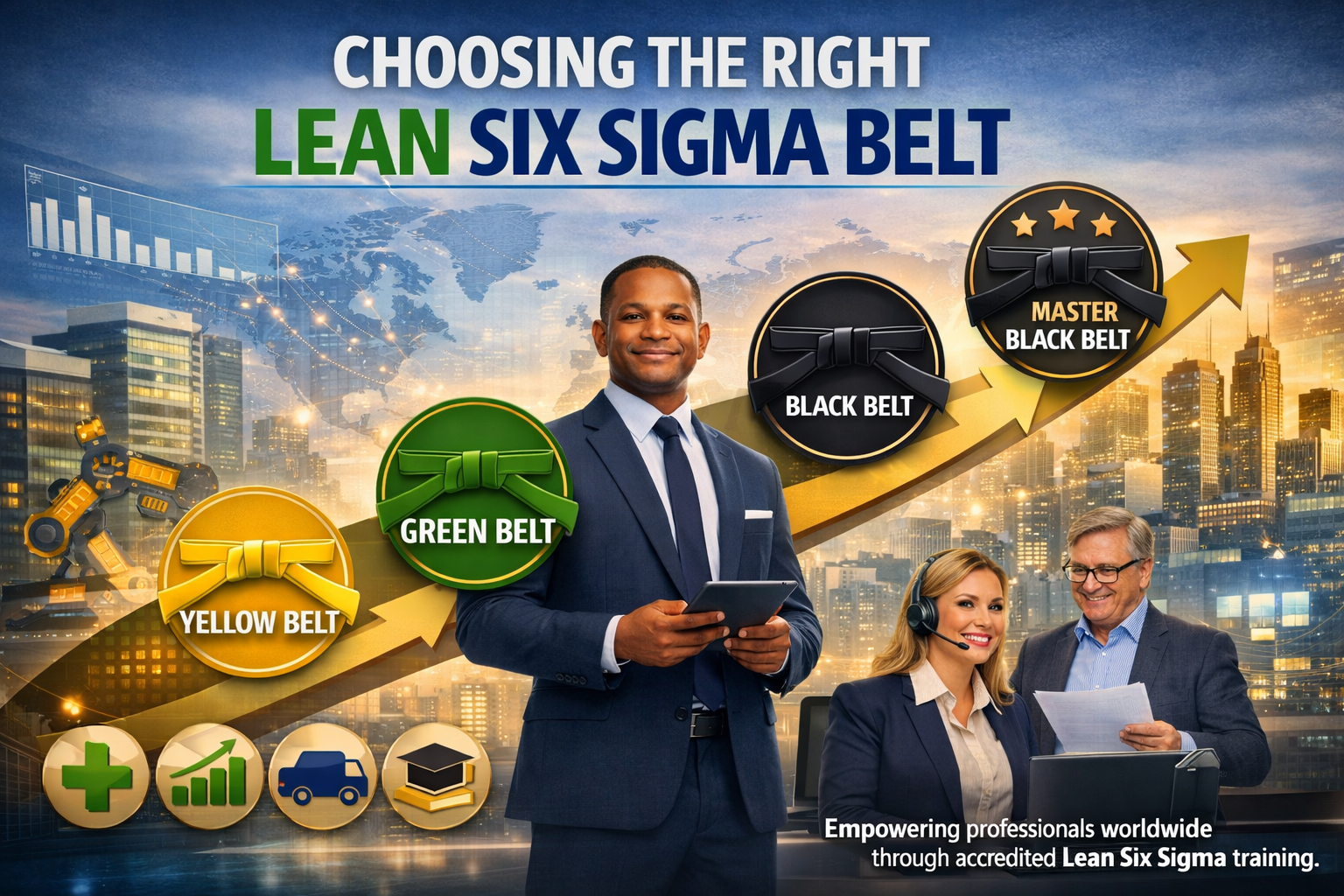
Lean Six Sigma Certification Levels (and Who They’re For)
Yellow Belt
Ideal for:
Focus: Foundational knowledge, basic tools, and participation in improvement initiatives.
Green Belt
Ideal for:
Mid‑level professionals
Project managers
Analysts
Supervisors
Focus: Leading improvement projects, data analysis, problem‑solving, and process optimisation.
Black Belt
Ideal for:
Focus: Advanced analytics, strategic leadership, organisational transformation, and coaching Green Belts.
Why Choose Harrybaker Training Institute for Lean Six Sigma Certification?
Harrybaker Training Institute is a globally recognised, accredited provider of Lean Six Sigma training trusted by professionals and organisations worldwide.
What sets Harrybaker apart?
Accredited Lean Six Sigma programs aligned with global standards
Expert trainers with real‑world industry experience
Practical, hands‑on learning with case studies and simulations
Flexible learning options (virtual, classroom, self‑paced)
High exam success rates
Globally recognised certificates
Post‑training support to help you apply what you learn
If you want Lean Six Sigma training that is practical, respected, and career‑transforming, Harrybaker is the partner you want.
FAQs
1. Is Lean Six Sigma still relevant in 2026?
Absolutely. With AI, automation, and global competition accelerating, Lean Six Sigma is more relevant than ever.
2. Which Lean Six Sigma certification should I start with?
Most professionals begin with Yellow Belt or Green Belt, depending on their career goals.
3. Can Lean Six Sigma help me switch careers?
Yes. It’s one of the most transferable skillsets across industries.
4. Does Harrybaker Training Institute offer online Lean Six Sigma training?
Yes, fully online, instructor‑led, and self‑paced options are available.
2026 belongs to professionals who can solve problems, lead change, and drive measurable results. Lean Six Sigma gives you that power.
If you’re ready to elevate your career, stand out in a competitive job market, and become the kind of professional organisations fight to hire, then now is the time to get certified.
👉 Enrol in Lean Six Sigma training with Harrybaker Training Institute today and position yourself for success in 2026 and beyond.